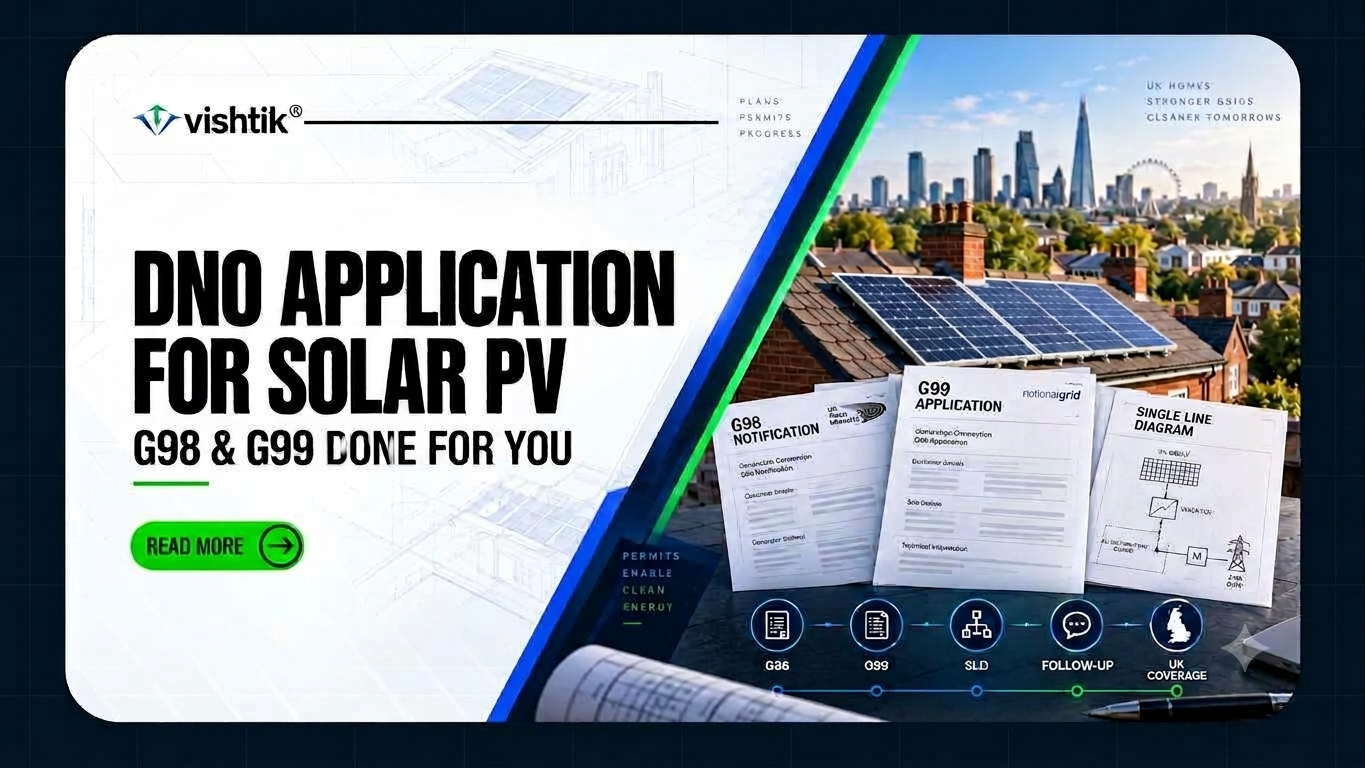
What Is a DNO Application for Solar PV?
When you install solar panels in the UK, the system usually needs to be connected to the local electricity network. Before or after installation, depending on the type of system, you may need to notify or apply for approval from your Distribution Network Operator (DNO).
A DNO application is the process of informing your local electricity network operator about a new solar PV system or requesting permission to connect it to the grid.
The DNO needs to check whether the local network can safely handle the electricity your system may export. This helps protect the electricity supply, other properties and the equipment connected to the network.
For solar installers, getting the DNO process right helps avoid unnecessary delays and additional work. For homeowners, it helps ensure their solar system is connected in line with the relevant requirements.
G98 vs G99: What Is the Difference?
G98 and G99 are UK technical requirements for connecting electricity generation systems, including solar PV, to the distribution network.
The main difference is the size of the generating system and whether the connection can follow the simpler notification process or needs approval before installation.
| Requirement | G98 | G99 |
|---|---|---|
| Typical application | Smaller generation systems | Larger or more complex generation systems |
| Capacity threshold | Up to 16A per phase | Above 16A per phase, or where the DNO requires a G99 route |
| Common single-phase example | Up to 3.68kW | Above 3.68kW |
| DNO process | Usually install and notify afterwards | Apply and obtain the required approval before installation |
| Common documentation | G98 notification and system details | G99 application, technical details and supporting engineering documents |
These are general thresholds for standard systems. The correct route depends on the system design, connection arrangement, inverter settings and the DNO’s requirements.
What Is G98?
G98 is generally used for smaller, type-tested generation systems connected to the electricity network.
For a typical single-phase domestic solar installation, G98 may apply where the total generating capacity is no more than 16A per phase. This is commonly equivalent to 3.68kW on a single-phase supply.
Under the standard G98 process, the installer can usually install the system first and then submit the required notification to the DNO within 28 days of commissioning.
Example: A homeowner installs a standard 3.6kW solar inverter. If the system meets the applicable G98 requirements and the DNO does not specify another route, the installer can generally use the G98 notification process after commissioning.
The important point is that G98 is not simply a form to submit whenever a system is small. The equipment and installation must also meet the relevant technical requirements.
What Is G99?
G99 generally applies to larger generation systems or installations that need a more detailed assessment by the DNO.
For standard connections above 16A per phase, the installer will normally need to submit a G99 application and receive the required approval before installing or connecting the generation system in parallel with the network.
The DNO may review:
- The proposed solar PV capacity and inverter specifications
- The property’s existing electrical supply and connection arrangement
- The system’s maximum export to the grid
- Protection settings and other technical requirements
- The supporting single line diagram (SLD) and engineering information
The DNO may approve the proposed connection, request additional information or specify changes to the design.
Example: A solar installer is planning a 6kW single-phase inverter installation. As this is above the standard 3.68kW single-phase G98 threshold, the installer will generally need to follow the G99 application process and wait for the required approval before proceeding with the relevant connection work.
How Does the DNO Application Process Work?
The exact process can vary between DNOs and installations, but a typical G99 application follows these steps.
1. Check the System Design
Start by confirming the solar PV capacity, inverter specifications, phase arrangement and expected export.
This is important because the DNO application route is based on the electrical characteristics of the proposed installation, not just the number of solar panels on the roof.
2. Prepare the Application Documents
The installer may need to provide:
- DNO application or notification form
- Solar inverter and generation system details
- Single line diagram (SLD)
- Relevant protection and technical information
- Site and customer details
The DNO may request further documents depending on the proposed connection.
3. Submit the DNO Application
Submit the correct G98 notification or G99 application to the relevant DNO.
For G99 systems, do not assume that submitting the application means the system has been approved. The installer should check the DNO’s response and any conditions before proceeding.
4. Respond to DNO Queries
The DNO may ask for clarification, revised drawings or additional technical information.
Accurate documentation helps reduce avoidable back-and-forth. However, the review time and outcome depend on the DNO and the complexity of the proposed connection.
5. Complete the Connection and Required Follow-Up
Once the required approval and installation conditions are satisfied, the installer can proceed with the relevant installation and commissioning work.
Any required commissioning documents, notifications or follow-up submissions should then be completed in line with the DNO’s requirements.
Why Is a Single Line Diagram Important?
A single line diagram (SLD) is one of the key engineering documents used in a solar DNO application.
It provides a simplified view of how the solar PV system connects to the property’s electrical installation and the electricity network.
Depending on the system, an SLD may show:
- Solar PV array and inverter
- AC distribution board
- Metering and isolation arrangements
- Protection equipment
- Grid connection point
A clear and accurate SLD helps the DNO understand the proposed installation and assess its connection requirements.
For installers, having the correct engineering documents ready can make the application process easier to manage and reduce the risk of queries caused by missing or unclear information.
What Happens If a DNO Application Is Delayed or Rejected?
A DNO application may be delayed if important technical details are missing, the drawings do not match the proposed installation or the DNO needs further information.
In some cases, the DNO may identify network limitations or request changes to the proposed connection.
For solar installers, this can affect installation schedules, customer expectations and project costs.
For homeowners, it may mean waiting longer before the solar system can be connected or allowed to export electricity to the grid.
The best approach is to check the applicable connection requirements early, prepare accurate documents and respond promptly to DNO queries.
Important: A G98 notification or G99 approval does not automatically confirm that every other requirement for the installation has been met. The installer must also comply with the applicable electrical, commissioning, export and other connection requirements.
How Vishtik Helps With Solar DNO Applications
Preparing solar engineering documents and dealing with DNO requirements can take valuable time away from installers.
Vishtik supports UK solar installers with engineering and permitting services, including:
- G98 and G99 support: Assistance with the relevant notification or application documentation.
- Single line diagrams: Engineering drawings prepared to support the proposed solar connection.
- Solar engineering review: Technical checks to help identify documentation issues before submission.
- DNO application support: Help preparing the required information and responding to documentation-related queries.
Whether you are installing solar on a residential property or working on a larger commercial project, having the right engineering support can help make the process more straightforward.
Vishtik works with solar professionals to make the engineering and application side of projects easier to manage, so installers can spend more time delivering installations and supporting their customers.
Need help with a G98 notification, G99 application or solar single line diagram?
Visit Vishtik to learn more about our UK solar engineering services and how we can support your next project.