




If you work in U.S. solar, you already know this truth, panels aren’t the problem, labor isn’t the problem, even supply chains aren’t the biggest headache anymore.
The real project killer?
Solar permit design.
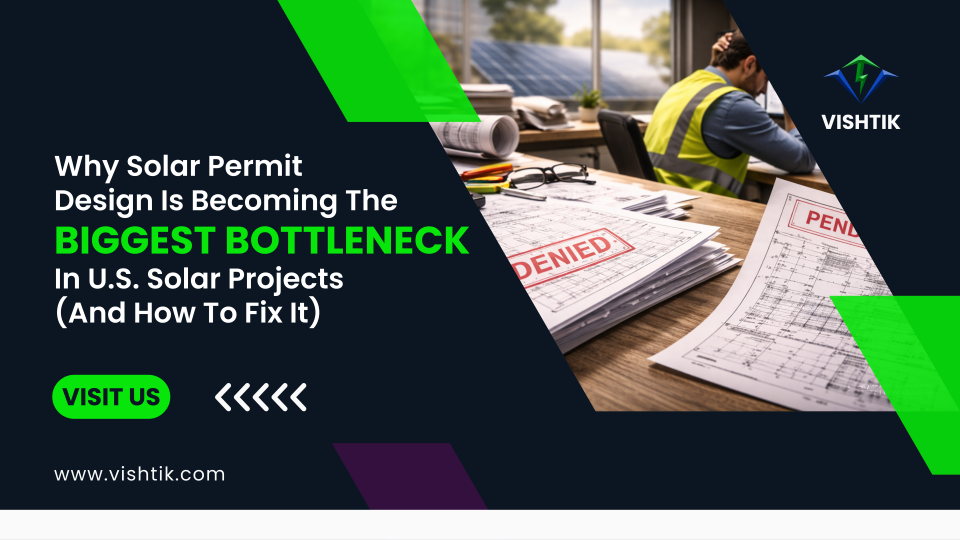
Projects today aren’t getting stuck on rooftops. They’re getting stuck in inboxes, review queues, and revision loops, waiting for an AHJ to say “approved” instead of “please revise and resubmit.”
And if you’ve ever had a permit bounced back for a missing label or a setback note that “didn’t match our local interpretation,” you know exactly how painful this bottleneck has become.
Let’s talk about why solar permit design is slowing down U.S. solar projects and how the industry can fix it.
Solar Is Moving Fast. Permits… Not So Much.
The U.S. solar market is scaling fast. Installers are expanding into new states, EPCs are juggling more projects than ever, and homeowners expect timelines closer to Amazon Prime than traditional construction.
But permit requirements?
They’re moving at local-government speed.
Every AHJ (Authority Having Jurisdiction) has:
- Its own checklist
- Its own code interpretations
- Its own formatting preferences
- And sometimes… its own unwritten rules
What passed smoothly in Arizona might get flagged instantly in California. What worked last year might suddenly fail after a local code update.
Solar permit design used to be a formality.
Now, it’s a critical path item.
The Real Reasons Solar Permits Get Delayed (Hint: It’s Not “Bad Luck”)
Most permit delays come down to a few repeat offenders:
1. AHJ-Specific Requirements Are Ignored
A generic permit set doesn’t cut it anymore.
Fire setbacks, labeling standards, structural assumptions, grounding notes, AHJs want designs tailored specifically to their jurisdiction, not a recycled template.
And yes, they notice.
2. NEC Updates Are Moving Faster Than Designs
With NEC 2023 and newer interpretations rolling out, requirements for:
- Rapid shutdown
- Conductor sizing
- Disconnect placement
- Equipment labeling
have become stricter and more detailed.
Miss one small code note, and the permit comes back faster than a bad Yelp review.
3. Structural Calculations Are No Longer “Optional”
Many AHJs now expect:
- Roof load calculations
- Attachment spacing justification
- Wind and snow load references
A simple “engineered to code” note doesn’t always fly anymore.
4. Utility and Permit Docs Don’t Match
One of the most common (and frustrating) issues:
- Permit drawings say one thing
- Utility interconnection documents say another
AHJs hate inconsistencies, and they’ll absolutely make you fix them.
5. Revisions Take Too Long
Even when the issue is minor, slow revision turnaround can delay projects by weeks.
And let’s be honest, installers don’t have time to babysit permit corrections when they’re trying to close sales and manage installs.
Why This Is Now the BIGGEST Bottleneck
Here’s the shift happening in U.S. solar:
- Equipment is standardized
- Installation crews are experienced
- Sales cycles are optimized
So the only thing left that can slow everything down is paperwork.
And solar permit design sits right in the middle of:
- Engineering accuracy
- Code compliance
- Local regulations
- Project timelines
A weak permit design process doesn’t just delay approvals, it:
- Pushes installs back
- Delays PTO
- Frustrates homeowners
- Hurts cash flow
That’s not a design problem anymore.
That’s a business problem.
So… How Do You Fix the Solar Permit Bottleneck?
The solution isn’t magic software or AI buzzwords.
It’s better engineering discipline and smarter workflows.
Here’s what actually works:
1. Design With the AHJ in Mind (Not Just the Code Book)
NEC compliance is the baseline, not the finish line.
Effective permit design considers:
- Local fire department preferences
- City-specific setback interpretations
- Formatting and labeling expectations
Designs that think like the AHJ get approved faster. Period.
2. Adopt a Compliance-First Design Approach
Instead of designing fast and fixing later:
- Build compliance into the first draft
- Use checklists tied to jurisdiction
- Validate SLDs, layouts, and notes before submission
One clean submission beats three “quick revisions” every time.
3. Standardize Where Possible, Customize Where Required
The smartest teams use:
- Standard base templates
- AHJ-specific overlays
- State-level code logic
This keeps designs consistent without falling into the “one-size-fits-none” trap.
4. Speed Up Revisions (Because They Will Happen)
Let’s be realistic, revisions are part of the process.
What matters is:
- Fast turnaround
- Clear correction responses
- No back-and-forth confusion
In solar, speed equals trust.
5. Treat Permit Design as a Growth Lever
The most successful U.S. installers don’t see permit design as backend work.
They see it as:
- A way to shorten project timelines
- A competitive differentiator
- A customer experience booster
When permits move fast, everything else follows.
Where Vishtik Fits Into This Picture
At Vishtik Technologies, solar permit design isn’t treated like paperwork, it’s treated like engineering strategy.
Our focus is simple:
- U.S. code-compliant designs
- AHJ-aware documentation
- Faster approvals with fewer revisions
- Free permit revisions, because real-world projects need flexibility
We work with U.S. installers and EPCs who want their projects moving, not stuck waiting for another redline email.
Final Thought: Solar Doesn’t Need to Be Slowed by Paper
The irony is clear, we’re building the future of clean energy…
But getting delayed by PDFs.
The good news?
This bottleneck is fixable.
With better permit design practices, compliance-first engineering, and teams that understand U.S. AHJs inside and out, solar projects can move at the pace the industry deserves.
And honestly?
That’s better for installers, homeowners, and the grid.